
We arrived in the capital Reykjavik, the only town of any size in iceland, with a population of around 130,000, seen here from the top of the Hallgrimskirkja.

About 100 km to the north is the Snaefellsnes peninsula. We stayed at the Freezer Hostel and Cultural Centre in Rif, at the end of the peninsula, where we were surprised with great beer and live music.


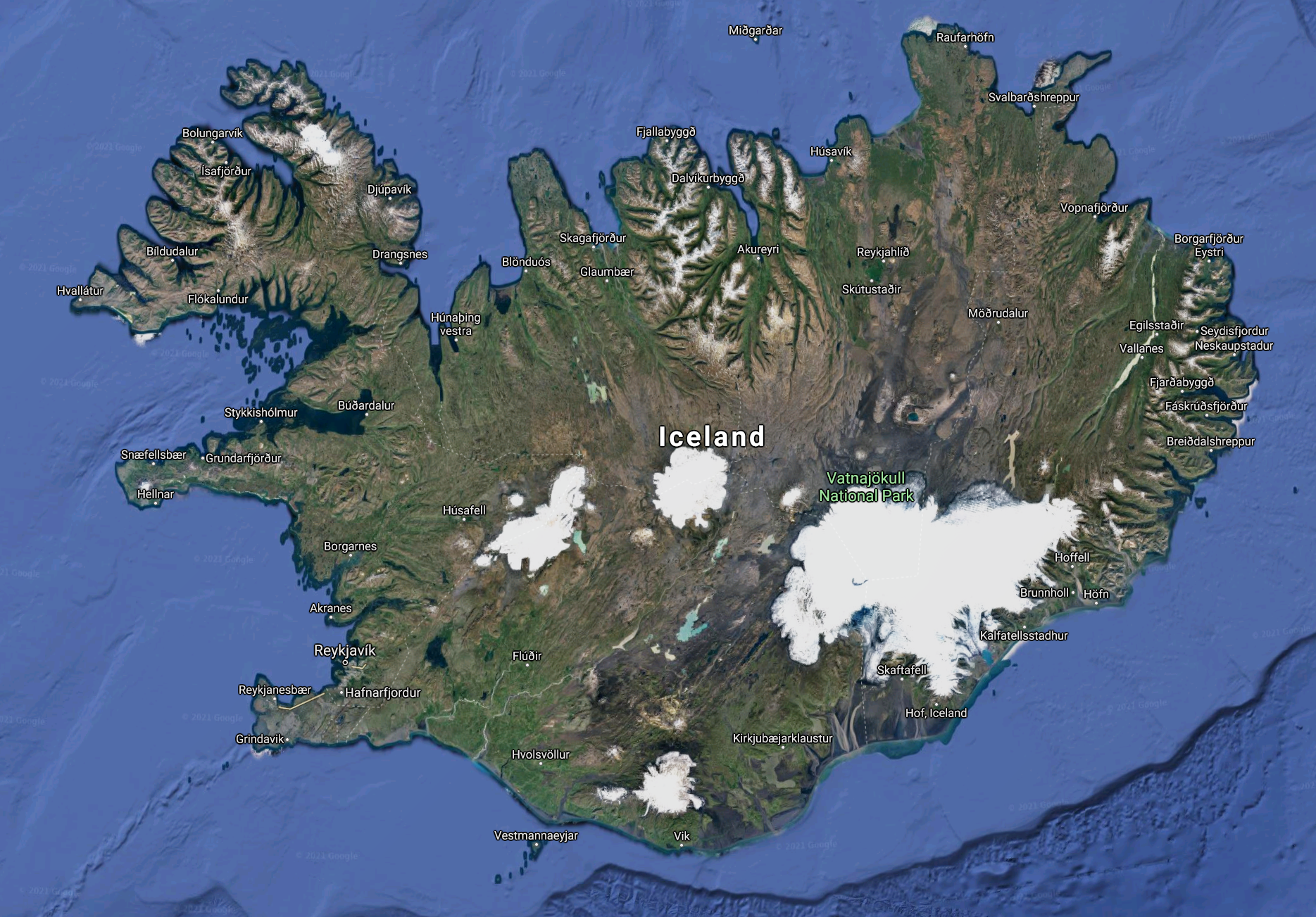
There are two ways to visit Iceland; clockwise or anti-clockwise. Like most people, we chose to tackle a part of the former. First stop, the area packed with the major tourist sites - linked by what is known as the Golden Circle.

Around 50 km to the east of Reykjavik lies Thingvellir, the site of the Icelandic parliament until 1798 (a thing originally meant an assembly). Here one can walk along the rift valley that marks the Mid-Atlantic ridge - the barrier between the North American and Eurasian tectonic plates. Not to be sniffed at.


Further east is the Haukadalur Valley, where one can watch the Strokkur geyser erupt - which happens regularly every few minutes up to heights of around 15-20 metres.
And a little further on, the Gullfoss falls.

What Iceland lacks in humans, it compensates for with birds. It is the height of summer, and the migratory birds that fly north to breed are in full residence. A number rest in the inland grasses with fresh water. The Whimbrel (Numenius phaeopus) spends the winter in Africa, and breeds in sub-arctic Europe and Asia. It can be told from the Curlew by its shorter bill and pronounced eye stripes.


Scaup (Aythya marila) spend the winters in northern Europe, Asia and North America, and go to the arctic to breed.

We (I) drove along the south coast.


Fulmars normally breed on sea cliffs, so I didn't expect to see one settled inland - especially next to a waterfall. They look like gulls, but are not - and can be told from the blue 'tubes' at the base of their bills, which they use to remove salt.

This is Skogafoss.

Further east on the coast, by Solheimasandur, there is the wreck of a US navy C-117D plane which crashed in 1973. It has become a gruesome tourist attraction, though at least no one died in the crash. It is at best an excuse for a walk to look for birds.

At the Dyrholaey promontory, basalt rock has been carved by the sea.


On the natural steps of the cliffs, formed by basalt columns, is a colony of Kittiwakes (Rissa tridactyla).

The adult looks everything like what you'd expect a gull to look like (grey and white with a yellow bill) but it has dark black legs.

The young are altogether more fancy, with black markings on the head and wings.

It's feeding time, and maybe the bright red tongue of mum is a good cue.

Some Guillemots (Uria aalge) have muscled in on this ledge, with no intention of keeping to their side of the bed.

Looking west from Dyrholaey, across Reynishverfi beach, more accessible basalt cliffs can be seen.

We called in so that I could do my famous kittiwake impression.

It's always a joy to see Arctic Terns (Sterna paradisaea) - birds which breed in the north of the northern hemisphere, spend winter in the south of the southern hemisphere, and migrate the huge distances in between.


Waders were searching for food in the mud. Redshanks (Tringa totanus) are resident over much of Europe, but the sub-species T. t. robusta comes to Iceland to breed.

These Ringed Plovers (Charadrius hiaticula) are of the psammodroma sub-species, which breeds in Iceland, Greenland and northeast Canada, and spends the winter in west Africa.

Here is one of their chicks.

A young Dunlin (Calidris alpina), presumably born in Iceland, will soon leave for more southern lands.

Turnstones (Arenaria interpres) spend the winter in Iceland, but do not breed there - these have probably just returned from Greenland, still in their bright breeding plumage.

Purple Sandpipers (Calidris maritima) prefer to hunt on the rocks. They spend the winter in the north of Europe and North America, and breed in the arctic - though Iceland and northern Scandinavia have resident populations.

The Red-throated Diver (Gavia stellata) is another arctic breeder, at which time they develop a rusty stripe on their throats.

A mother keeps her chick close at hand...

...whilst this older youngster is more independent.

Further east again, to the point where the Breioamerkurjokull glacier flows out of Iceland's largest permanent ice sheet to meet the sea at a lagoon called Jokulsarlon.


I was overwhelmed by the beauty of the forms and hues, and took far too many photographs.


The kittiwakes and arctic terns also love it here.


Female Eiders (Somateria mollissima) swam around in the lagoon with their chicks. They are really northern ducks, and nest here in colonies of closely related individuals. They pluck downy feathers from their breasts to line their nests, which, once vacated, are famously harvested by the islanders for the filling of pillows and quilts.


The males, having mated, had lost their bright white and pistachio green and salmon pink pastel plumage - and had reverted back to their monochrome 'eclipse' form.

On the rocks hopped another really northern bird, the Snow Bunting (Plectrophenax nivalis). It is an arctic breeder, with yearly resident populations only found in Iceland (the insulae sub-species) and Alaska. The male has a pure white head and breast in the breeding season, but this one looks like it is already losing those feathers and changing back into the brown of winter.

The female was busy feeding her chick.

All these birds need to keep a watchful eye, for on the beach sat a Great Skua (Stercorarius skua). They are aggressive and fearless, and have no qualms about snatching a bird in flight for a meal.

But our tour was at an end. It was time to turn around and go clockwise back from whence we came. Driving back over the bridge I saw a Hooper Swan (Cygnus cygnus), another arctic breeder that is only resident all year in Iceland. Then I looked at the two chicks - lanky and a little scruffy, with pink noses, but with the promise of elegance, sitting in the back of the car listening to music on their headphones and eating crisps.


